


Internal Tooth Whitening (Devital Bleaching)
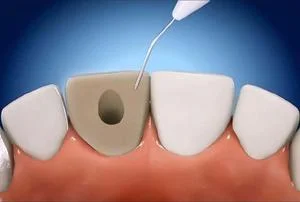
Devital bleaching (internal bleaching) is an internal whitening technique used to treat discoloration in teeth that have undergone root canal treatment. Blood pigments or filling materials remaining inside the tooth after root canal therapy can cause the tooth to darken over time.
In this treatment, special bleaching agents (typically sodium perborate or hydrogen peroxide) are placed inside the tooth to whiten the discolored tissues. The procedure is completely painless because the tooth nerve was removed during root canal treatment.
After the bleaching agent is placed inside the tooth, it is sealed with a temporary filling. The patient returns for a follow-up a few days later to evaluate the color change. The process can be repeated until the desired whiteness is achieved; generally, 2 to 4 sessions are sufficient.
Who Is This Treatment For?
Devital bleaching is recommended in the following situations:
- Patients with significant tooth darkening following root canal treatment
- Teeth discolored due to pulp necrosis caused by trauma
- Individuals with aesthetic concerns, particularly those with visible color differences in front teeth
- Patients seeking a more conservative whitening solution instead of dental crowns
Frequently Asked Questions
Is devital bleaching permanent?
The results are long-lasting, but slight color regression may occur over time. The procedure can be repeated if needed. It is generally effective for 2 to 5 years.
Does devital bleaching damage the tooth?
When applied at the correct concentration and under controlled conditions, it does not damage the tooth structure. The treatment is safely performed by a specialist dentist.
Can every discolored tooth be whitened?
Successful results are achieved in most cases. However, the treatment plan may vary depending on the cause and severity of the discoloration. In some cases, veneers or crowns may be alternative options.
This page is for general informational purposes only and does not constitute medical advice. Always consult a qualified dental professional before starting any treatment.