


Periapical Lesion Treatment
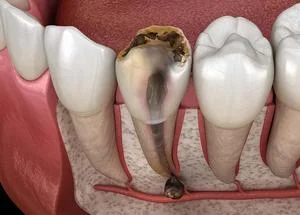
Periapical lesions are pathological tissues that form at the tooth root tip as a result of infection or inflammation. These lesions typically develop from untreated deep cavities, failed root canal treatments, or trauma. They appear as a radiolucent (dark) area at the root tip on X-ray images.
Root canal treatment for teeth with periapical lesions requires a more comprehensive approach than standard endodontic therapy. Meticulous cleaning and disinfection of the root canals is critically important for lesion healing.
During treatment, the root canals are carefully enlarged, irrigated with strong antiseptic solutions, and if necessary, medications such as calcium hydroxide are placed between sessions. The healing process is monitored with follow-up X-rays, and the lesion is expected to shrink over time.
Who Is This Treatment For?
Periapical lesion treatment is performed in the following situations:
- Teeth where a cyst or granuloma is detected at the root tip on X-ray
- Patients experiencing prolonged dull pain or pressure sensation in a tooth
- Cases with recurring abscess or fistula formation on the gum
- Teeth where the root tip lesion has not healed after previous root canal treatment
- Teeth with pulp necrosis developed after trauma
Frequently Asked Questions
What is a periapical lesion?
It is an inflammatory tissue that forms at the tooth root tip as a result of infection. It can present as a granuloma or cyst and appears as a dark area on X-rays.
How long does periapical lesion treatment take?
Depending on the size of the lesion, treatment may take 2 to 4 sessions. The healing period ranges from 3 to 12 months and is monitored through follow-up X-rays.
Can a tooth with a periapical lesion be saved?
In most cases, the tooth can be saved with proper endodontic treatment. However, depending on the size of the lesion and the condition of the tooth, surgical intervention or extraction may be necessary.
This page is for general informational purposes only and does not constitute medical advice. Always consult a qualified dental professional before starting any treatment.